
Why Is There No Single Way to Experience Spain?


Say Spain, and a handful of images arrive almost immediately: Gaudí’s fanciful architecture, flamenco dancers, tapas, sunlit plazas and Mediterranean beaches.
They are all Spain. But they do not belong to quite the same journey.
That is the challenge of planning a trip here. It isn’t finding enough to do. It is deciding which Spain you came to experience.
The country lends itself rather too easily to a checklist. Madrid, Barcelona and Seville can all be connected in a single itinerary. With Spain’s excellent rail system, you can move between them efficiently and return home having seen three of its most famous cities.
But Spain is more than a collection of stops, and its regions are not interchangeable. The landscape changes. The food changes. History has left a different imprint in each place. In some regions, even the language and the rhythm of the day are different.
A journey through Spain becomes far more interesting once you stop trying to fit the entire country into it.
Madrid and the Spain of Kings

Madrid sits at the center of the country, geographically and historically. This is a Spain of royal palaces, broad boulevards and some of Europe’s most important art collections.
The Prado Museum alone can occupy hours, particularly with a knowledgeable guide who can lead you past the paintings everyone comes to see and toward the stories hidden within them.
The Reina Sofía Museum introduces a different Spain through the work of Picasso, Dalí and other modern masters.
Yet Madrid is not preserved behind museum glass. Its neighborhoods are animated well into the evening. Markets, small restaurants and century-old taverns reveal a city that takes its time over meals and expects you to do the same.
Beyond the capital, Toledo, Segovia and Ávila offer glimpses of Roman, medieval, Jewish, Christian and Islamic Spain.
These cities are easily reached from Madrid, but each deserves more than a hurried day trip.
For travelers drawn to art and history, Madrid and central Spain could easily become the heart of an entire journey.
Andalusia and Its Layers of History

Travel south and Spain changes.
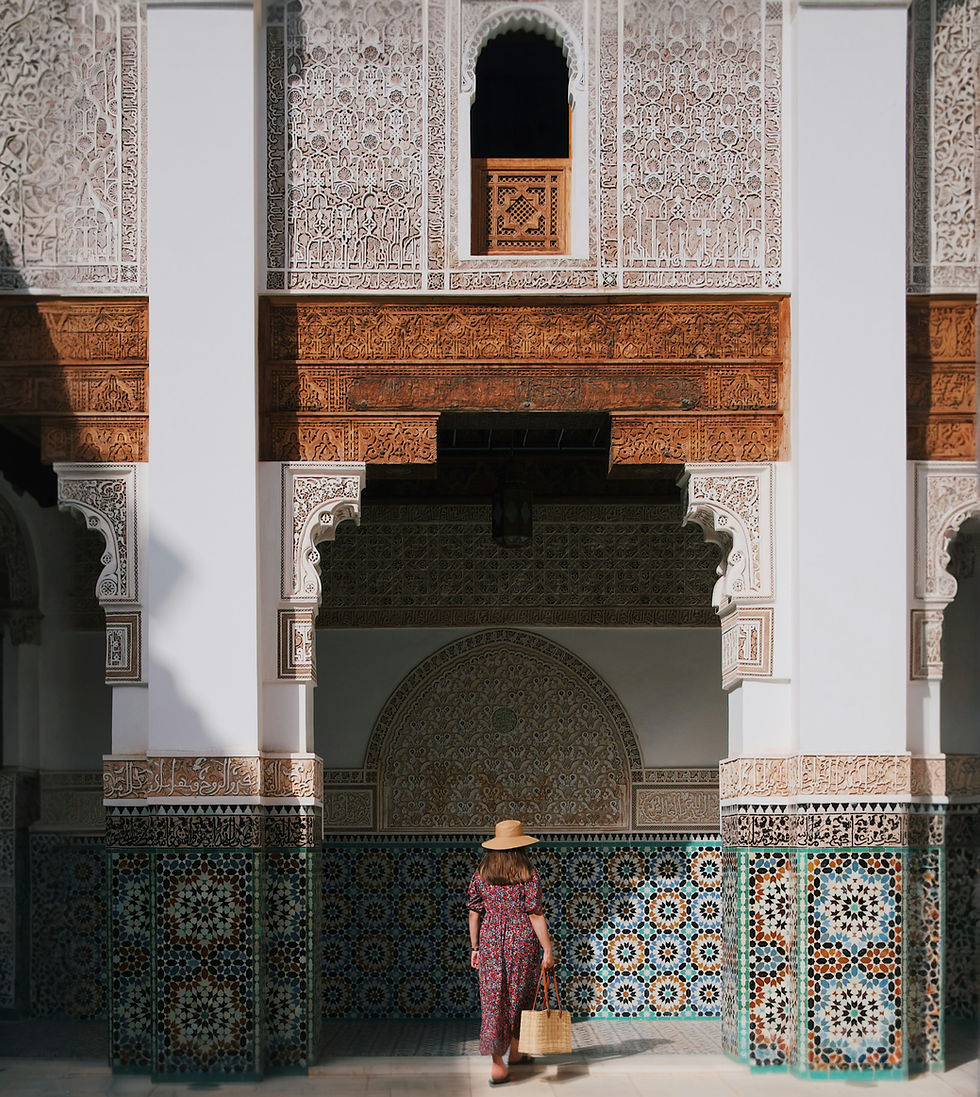
In Andalusia, history is not confined to one period or one people. Roman foundations, Islamic palaces and Christian cathedrals stand within the same cities, sometimes within the same buildings.
Granada has the Alhambra, where carved stone, water and gardens create a place unlike anything else in Europe.
Córdoba’s famous mosque-cathedral embodies centuries of changing power and belief.
Seville brings royal history together with tiled courtyards, orange trees and flamenco that is far more affecting when experienced in an intimate setting than on a large stage.
This is also a region that rewards time away from its headline attractions. White villages climb the hillsides.
Olive groves stretch beyond the road. Lunch may last longer than anticipated, followed by an afternoon that refuses to be hurried.
Andalusia could easily fill ten days on its own.
Spain Looks North, Too
The Spain many travelers picture is dry, warm and Mediterranean. Northern Spain disrupts that image completely.
Galicia, Asturias, Cantabria and the Basque Country face the Atlantic. The scenery is greener, the coastline more rugged, and the weather less predictable. Fishing villages, forested hills and sections of the Camino de Santiago replace the sunbaked landscapes of the south.
Food provides another reason to look north. San Sebastián is known for both its Michelin-starred restaurants and the pintxos displayed across the counters of neighborhood bars. Bilbao pairs its industrial history with contemporary architecture and art. In Asturias, cider is poured from a dramatic height, while Galicia’s relationship with the sea appears on almost every menu.
This part of Spain can feel less familiar to first-time visitors, which is precisely what makes it so compelling.
It offers a journey shaped by food, countryside and strong regional identities rather than Spain’s most recognizable sights.
The Spain That Faces the Mediterranean

Then there is the Spain of Barcelona, Valencia and the Mediterranean coast.
Barcelona brings together Gothic streets, modernist architecture and an unmistakably Catalan identity. It can anchor a cultural journey, but it can also be paired with the coastal villages and coves of the Costa Brava.
Farther south, Valencia has its own language, culinary traditions and architectural personality. It is the birthplace of paella, although the authentic dish may look rather different from versions served elsewhere. Its historic center and futuristic City of Arts and Sciences demonstrate how comfortably Spain allows different centuries to coexist.
Off the coast, the Balearic Islands offer yet another interpretation. Mallorca is not merely a beach escape. Beyond its coves are mountain villages, walking trails, vineyards and the lively city of Palma.

Even Spain’s islands cannot be grouped neatly together. The Canary Islands, with their volcanic terrain and position off the coast of Africa, create a very different journey from the Mediterranean Balearics.
So, What Belongs in a Ten-Day Trip?
There is no single answer.
Ten days might combine Madrid with the great cities of Andalusia.
Another traveler might prefer Barcelona, Valencia and a few days beside the Mediterranean.
Someone motivated by food and landscape could spend the entire time exploring the Basque Country and Spain’s Atlantic north.
Each would return having experienced Spain. None would have experienced all of it.
That isn’t a failure of the itinerary. It is the point.
The best Spain journey doesn’t attempt to collect every famous city. It allows enough time for one part of the country to reveal its character, rather than presenting several regions in rapid succession.
Spain cannot be reduced to one definitive trip. There are too many histories, landscapes and ways of living within its borders.
Perhaps the real question isn’t whether Spain deserves a place on your list.
It is which Spain you want to encounter first.


Comments